How Kansas Freeze-Thaw Cycles Destroy Roofs
Want a straight answer about your own roof?
Free inspection, written report, no sales pitch. We cover Johnson, Douglas, Wyandotte and Leavenworth counties.
If you've spent a winter in Kansas, you know how the temperature swings work. It's 55 degrees on Tuesday, 18 on Wednesday, back to 45 by Friday. That back-and-forth isn't just annoying for your wardrobe. It's one of the most destructive forces your roof deals with all year. Kansas averages over 40 freeze-thaw cycles per winter, and every single one does a little more damage.
The science in plain English
Water finds its way into every tiny crack, gap, and porous surface on your roof. Caulk seams, nail holes, the edges of flashing, hairline cracks in shingles, it gets in everywhere. When the temperature drops below 32, that water freezes. And when water freezes, it expands by about 9%. Doesn't sound like much, but it's enough to widen cracks, lift flashing, and push shingles apart. Then it warms up, the ice melts, the water works deeper into the newly widened gap, and the whole thing freezes again. Forty times a winter.
Where the damage shows up
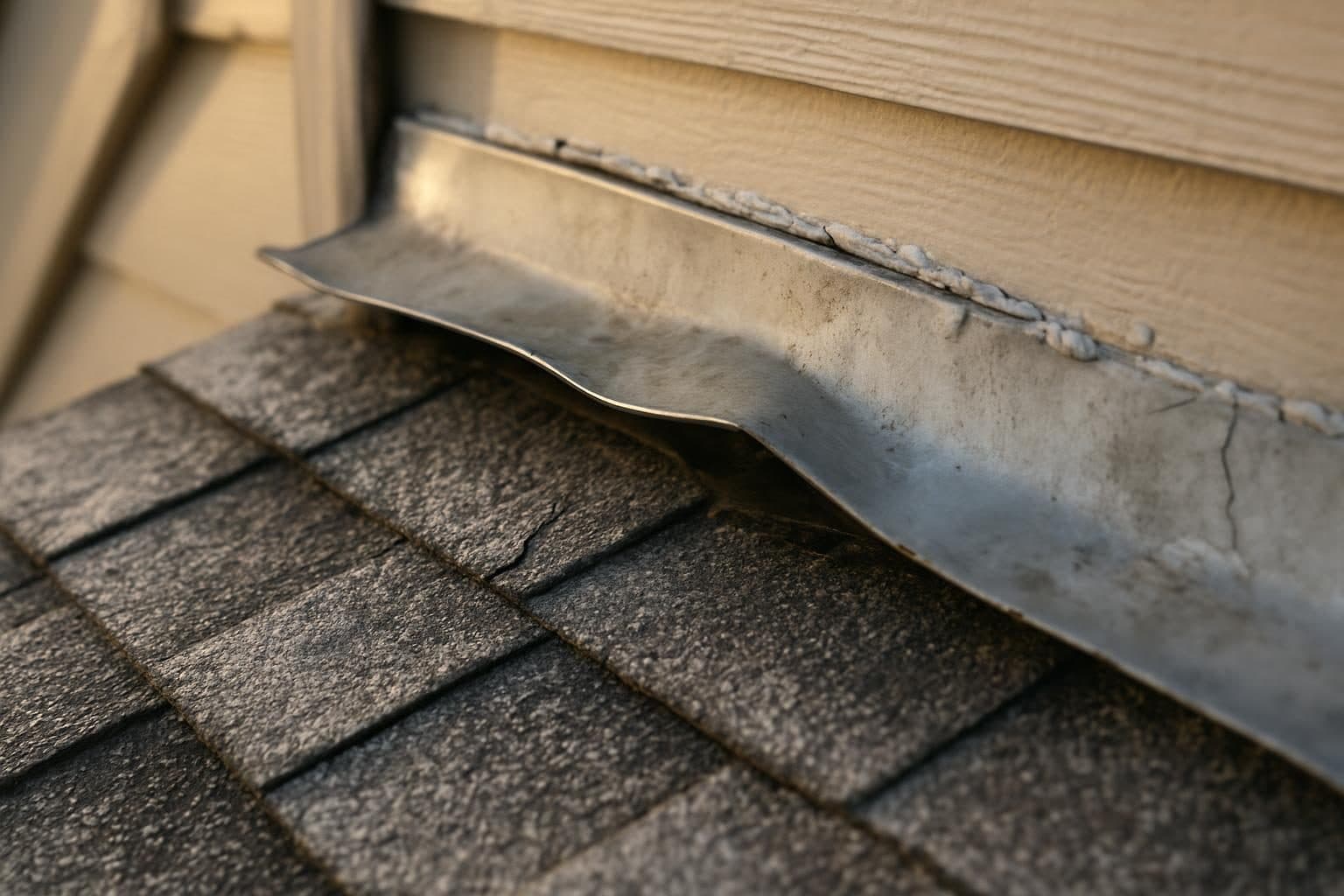
- Flashing around chimneys and vents: the sealant cracks and separates from the metal, letting water behind it
- Shingle edges: the freeze-thaw wedge effect lifts shingle tabs and breaks the seal strip
- Masonry and mortar: chimney mortar joints are especially vulnerable and can crumble over a few seasons
- Valleys and transitions: any point where two roof planes meet collects extra water and gets hit harder
- Gutters: ice expands inside gutters and can pull them away from the fascia board
Why Kansas is worse than most places
States farther north get colder, but they tend to stay cold. Once it freezes in Minnesota, it pretty much stays frozen until spring. Kansas sits right in the transition zone where cold fronts and warm air masses trade off all winter long. We're constantly crossing that 32-degree threshold, which means we get more freeze-thaw cycles than places that are actually colder than us on average. It's the cycling that does the damage, not the cold itself.
What you can do about it
You can't stop the weather, but you can make sure your roof is sealed up tight against it. Good caulk, properly installed flashing, shingles that are still in good shape with intact seal strips. That's what keeps water out in the first place. A mid-winter inspection catches the little gaps before the next round of freeze-thaw turns them into big problems. It's one of those cases where spending a little now saves a lot later.
Worried about what this winter is doing to your roof? Give us a call at (913) 954-4501 and we'll come take a look.
Want a straight answer about your own roof?
Free inspection, written report, no sales pitch. We cover Johnson, Douglas, Wyandotte and Leavenworth counties.