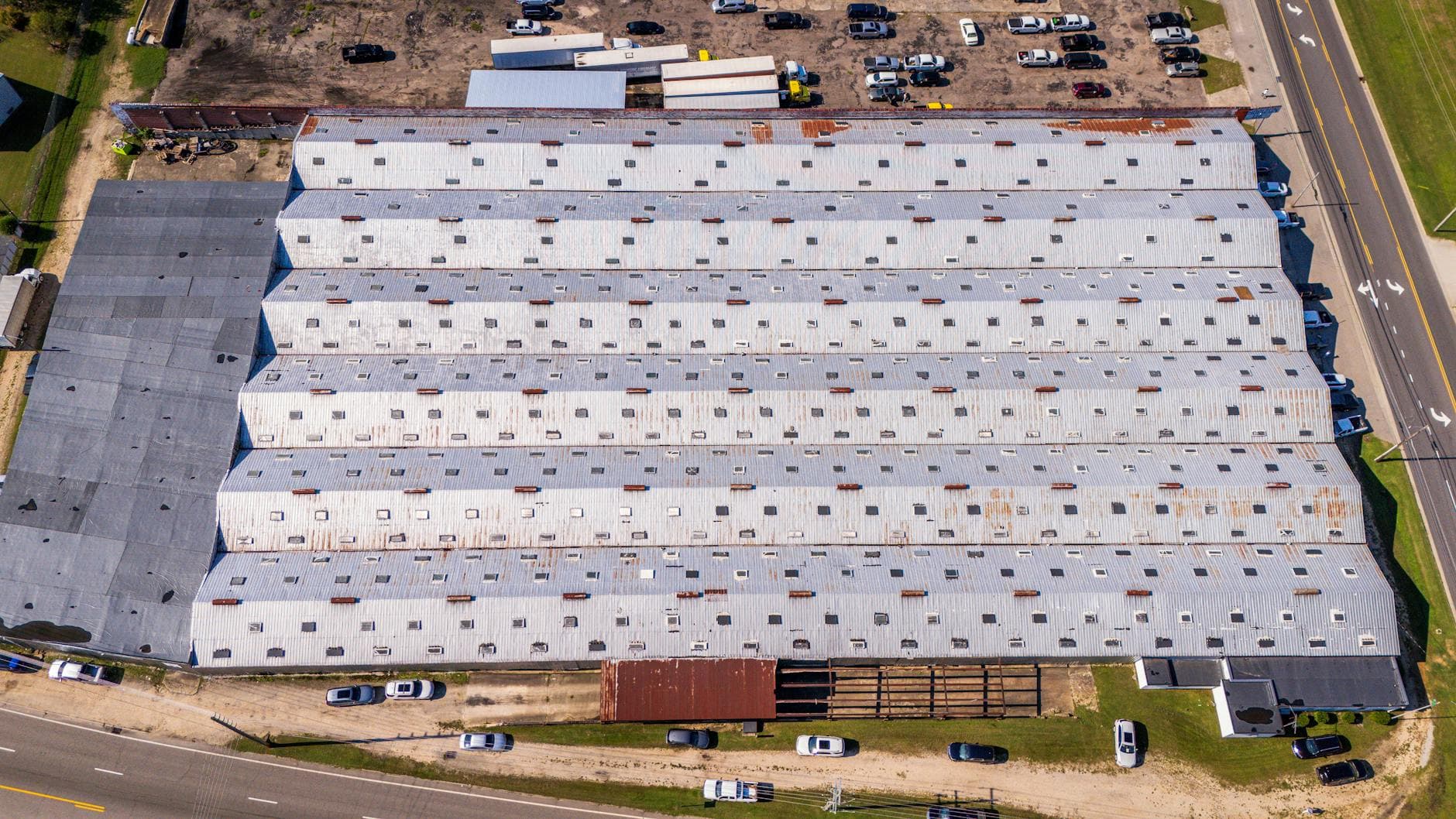
Flat Roofing
TPO, EPDM and modified bitumen flat roofing: installed, repaired and restored across Olathe, Shawnee, Lawrence and the Kansas City metro. Commercial buildings, additions, and the low-slope sections most crews would rather not touch.
A different trade from shingles
On homes, asphalt shingles require at least a 2:12 slope. Under the 2018 IRC, section R905.2.2, that is code, not preference, and commercial roofs carry their own code requirements again. A membrane roof still drains, but it leans far harder on watertight seams, flashing details and drainage design than shingles ever do. That is why a crew that is excellent on shingles can still be the wrong crew for a membrane, and why we treat flat work as its own discipline: on commercial buildings and on the low-slope porch, addition and garage sections of ordinary houses across Olathe, Shawnee and Lawrence.
Not sure whether your roof counts as flat? Our flat and low-slope guide covers how to tell, and what the code allows at every pitch.
Systems we install
TPO
White single-ply membrane, heat-welded at the seams. Reflective, which cuts summer heat gain on a building with conditioned space below.
EPDM
Black synthetic rubber with the longest track record of the single-plies. Durable, repairable, and tolerant of Kansas temperature swings.
Modified bitumen
Asphalt-based sheet in multiple plies. A common choice where the roof gets walked for equipment service, specified with walk pads where the traffic warrants them.
Coatings and restoration
Where the membrane and the insulation under it are still sound, a compatible fluid-applied coating can extend service life for well under replacement cost. We will tell you honestly which side of that line your roof is on.
Where flat roofs fail
Three problems account for most of the flat-roof calls we get from Olathe, Shawnee and Lawrence, and an inspection can often catch all three before they show up on a ceiling.
Ponding water
A working flat roof is pitched slightly toward its drains. Water still standing 48 hours after rain (the trade's usual warning benchmark, not a code test) points at lost fall, a blocked drain or deeper trouble, and standing water works on every weak seam it finds.
Hail bruising
Hail strikes a low-slope membrane far more directly than a steep roof, and the damage is often invisible from the ground. After a serious hail event a flat roof deserves an inspection even when nothing looks wrong from below.
Seams and penetrations
Leaks cluster at seams, drains, curbs and rooftop units, the details rather than the open field of the membrane. That is where an inspection spends its time.
Flat roofing questions
Can you put shingles on a flat roof?
No. Under the 2018 IRC, section R905.2.2, asphalt shingles require a minimum slope of 2:12. Below that, shingles are not a permitted covering. They shed water rather than seal against it, and on a low slope water sits long enough to work back under the courses. A flat or low-slope roof needs a membrane: TPO, EPDM or modified bitumen. If a previous owner shingled yours, that is a code problem to correct, not a maintenance item.
TPO or EPDM: which is better for a Kansas flat roof?
Both are proven here. TPO is white and reflective, which reduces summer heat gain. That is worth having on a building with a lot of roof area over conditioned space. EPDM is black synthetic rubber with the longer track record. In practice, installation quality and seam detailing matter far more than which membrane you pick, which is why the contractor question matters more than the material question.
Why does my flat roof hold water after it rains?
A working flat roof is not level. It is pitched slightly toward drains or scuppers. Ponding means the fall was never built in, the deck has deflected, or a drain is blocked. Water still standing 48 hours after rain is the benchmark the trade uses to call it a problem. Where the deck cannot be re-pitched, tapered insulation rebuilds the fall.
Does hail damage flat roofs differently?
Yes, and it matters for insurance claims. Hail strikes a flat membrane perpendicular rather than at a glancing angle, so a storm a steep shingle roof shrugs off can bruise or fracture a membrane, and the damage is invisible from the ground. After a significant hail event, a flat roof deserves an inspection even when nothing looks wrong from below.
Do you repair commercial flat roofs, or only replace them?
Both. A membrane with sound insulation and a localized seam or flashing failure is usually worth repairing. Once moisture is trapped in the insulation, or the membrane is at end of life across the whole area, repair stops being economic. An inspection tells you which situation you are in; a moisture survey settles it when it is genuinely unclear.
Do flat roof repairs need a permit in Johnson County?
It depends on the city, not the county. The City of Olathe, for example, publishes that no permit and no city inspection are required for reroofing or repair down to the deck on one- and two-family dwellings and townhomes, while other metro cities do require one for the same work. Commercial and low-slope work follows different rules again, and requirements change, so we confirm what applies to your specific address before work starts rather than assuming.
Flat roofing across the metro
Same crew, same standards, wherever you are. Your city page covers local codes, permit rules and what we see on roofs in your neighborhoods.

Ready to Protect Your Home?
Get a free inspection and estimate. EMTs, firefighters and veterans receive a $500 credit on a qualifying full roof replacement.