Flat Roof vs. Pitched Roof: Commercial Roofing in Johnson County
If you own a commercial building in Johnson County, your roof system is a different animal than what's on your house. Here's what to know about flat vs. pitched commercial options.
Want a straight answer about your own roof?
Free inspection, written report, no sales pitch. We cover Johnson, Douglas, Wyandotte and Leavenworth counties.
Commercial roofing is a different world from residential. The materials are different, the installation is different, and the problems are different. If you own or manage a commercial building in Johnson County, a retail strip, an office, a warehouse, understanding your roofing options is worth your time. The decision between flat and pitched isn't just about looks. It affects your maintenance costs, energy bills, and how long the roof will last.
Flat roof systems: TPO, EPDM, and modified bitumen
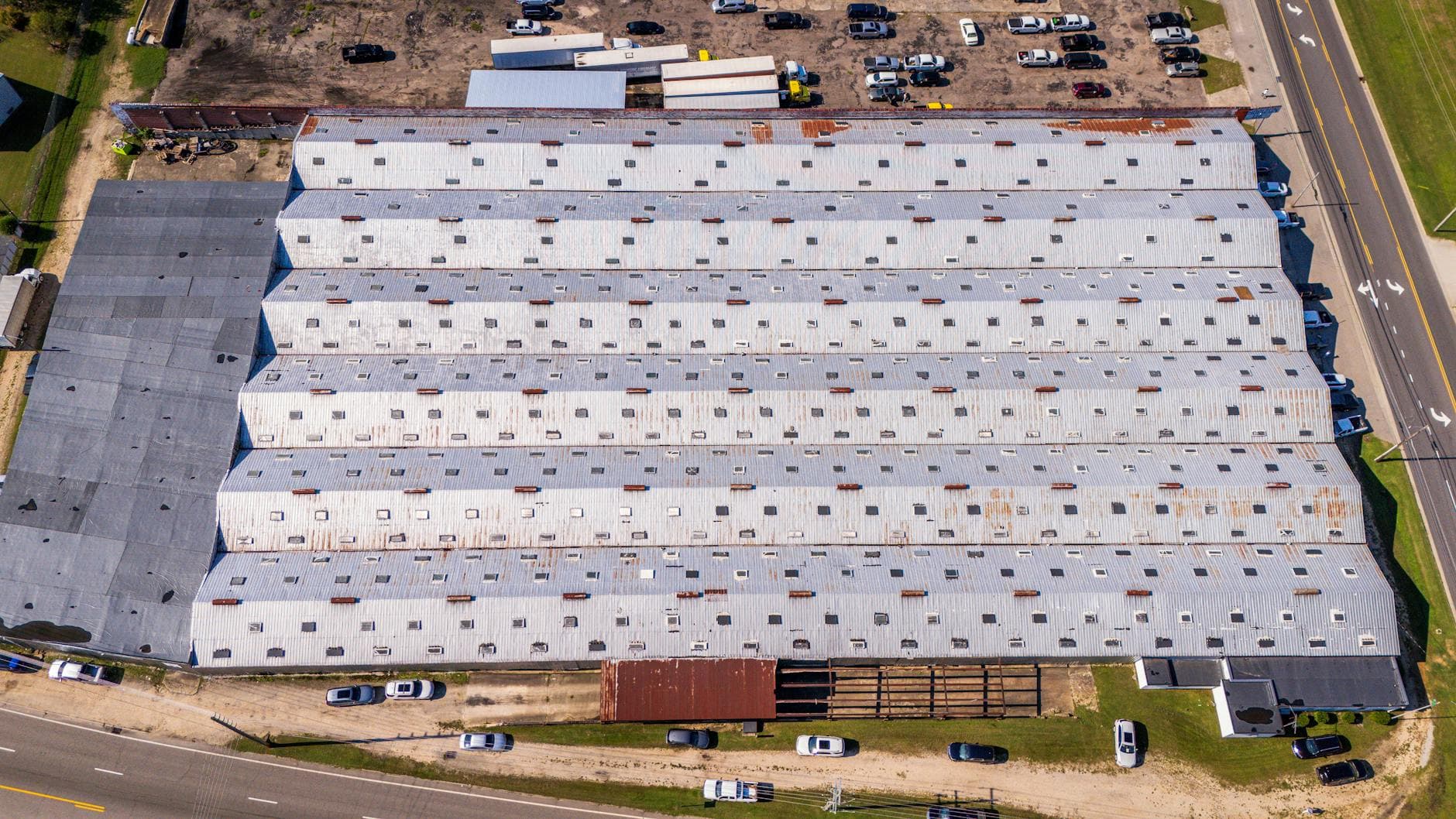
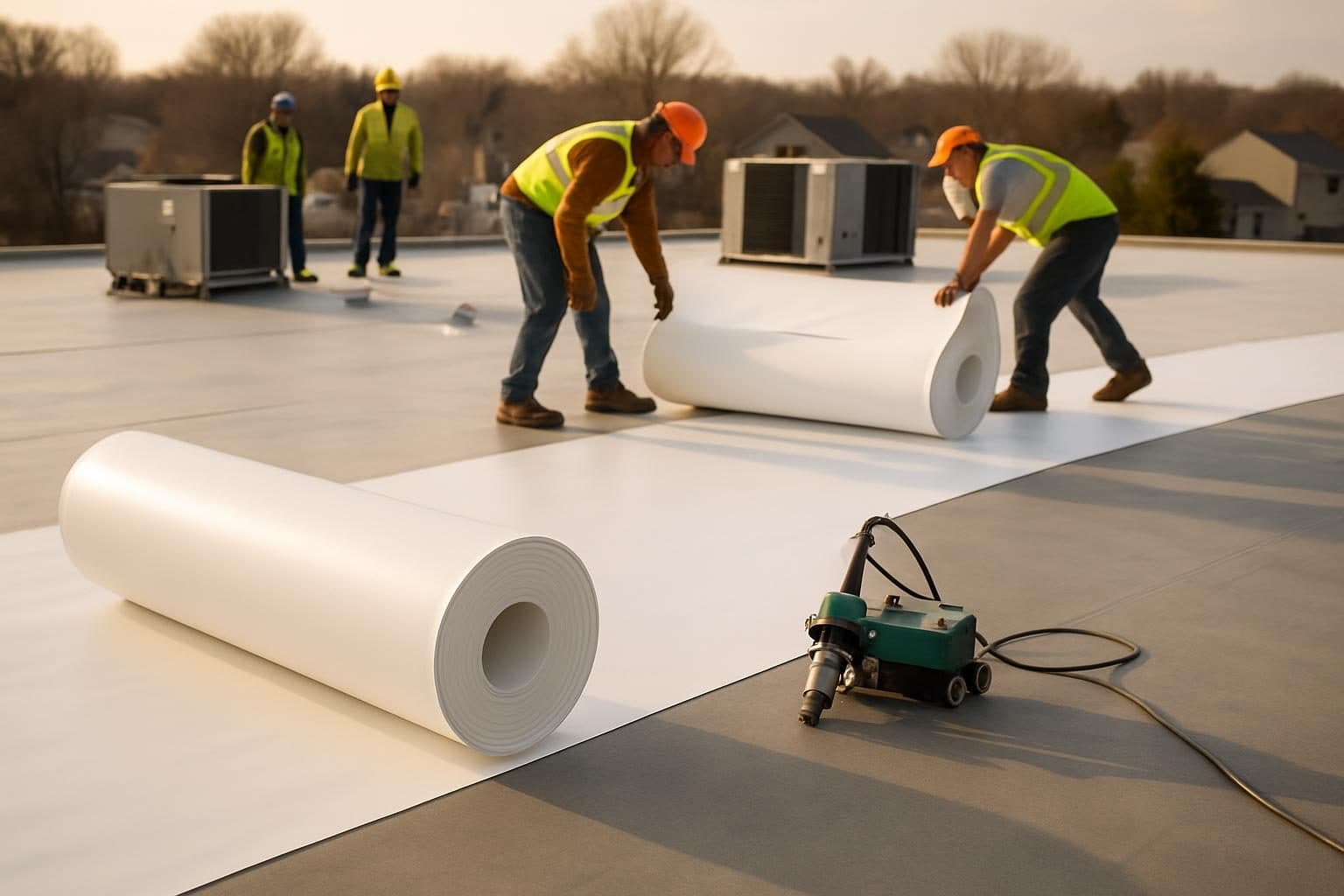
Most commercial buildings in the KC area have some type of flat or low-slope roof. The three main options are TPO (thermoplastic polyolefin), EPDM (rubber membrane), and modified bitumen. TPO is the most popular right now. It's a white membrane that reflects heat, comes in large sheets with heat-welded seams, and typically runs $6 to $10 per square foot installed. EPDM is the old workhorse: black rubber membrane, tried and true, runs $5 to $8 per square foot. Modified bitumen is an asphalt-based rolled product that gets torched or adhered in layers, usually $5 to $9 per square foot.
- TPO: white, heat-reflective, heat-welded seams, 20 to 30 year lifespan
- EPDM: black rubber, adhesive or mechanically fastened, 20 to 25 year lifespan
- Modified bitumen: multi-layer asphalt system, good for heavy foot traffic areas, 15 to 20 years
- Built-up roofing (BUR): multiple layers of asphalt and felt, still used on some older buildings
How roof pitch changes the price
4/12
Walkable
Standard labor rate
8/12
Steep
Roughly 15% more labor
12/12
Very steep
Harnesses, up to 35% more
When pitched makes sense for commercial
Not every commercial building has a flat roof. Churches, restaurants with visible rooflines, mixed-use buildings with residential above retail. These often have pitched roofs that use the same materials as residential work, just on a bigger scale. Standing seam metal is popular for commercial pitched roofs because it handles the larger spans well and lasts decades. If your building has a pitched section, you have more material options, but the installation is more complex and labor-intensive than flat work.
Common commercial roof problems in Kansas
Flat roofs deal with ponding water, areas where water pools instead of draining. In Kansas, the freeze-thaw cycles we get make ponding especially dangerous because that standing water freezes and stresses the membrane. Seam failures are another big one, particularly on older EPDM roofs where the adhesive has broken down. And on any commercial roof, penetrations, HVAC units, vents, pipes, are the most common source of leaks. Every hole in the membrane is a potential failure point.
Maintenance makes the difference
Commercial roofs need regular inspections more than residential roofs do. A small issue on a 10,000-square-foot flat roof can dump water into your building for weeks before someone notices. We recommend twice-a-year inspections for commercial flat roofs, spring and fall, with spot checks after major storms. It's cheap insurance against the kind of interior damage that shuts businesses down.
Own a commercial property in Johnson County? Give us a call at (913) 361-5443 and we'll come evaluate your roof system.
Want a straight answer about your own roof?
Free inspection, written report, no sales pitch. We cover Johnson, Douglas, Wyandotte and Leavenworth counties.