Winter Roof Emergency: What to Do When You Can't Wait for Spring
Your roof is leaking in December, it's 28 degrees outside, and you're wondering if anything can even be done right now. Here's what you need to know.
Want a straight answer about your own roof?
Free inspection, written report, no sales pitch. We cover Johnson, Douglas, Wyandotte and Leavenworth counties.
Nobody wants to deal with a roof problem in the middle of winter. But roofs don't check the calendar before they start leaking, and some problems can't sit for three months until the weather warms up. If you've got an active leak in January, water damage is happening right now. It's getting into your insulation, your drywall, maybe your electrical. Waiting isn't free. Here's what we can and can't do when it's cold outside.
What you should do right now
- Contain the water: bucket under the drip, move furniture and valuables out of the way
- If you can safely access the attic, find where the water is coming in and mark it
- Take photos and video of the damage. Your insurer may ask for documentation, so ask what it needs.
- Don't go on the roof yourself: ice, frost, wet shingles, and cold-stiffened legs are a recipe for a bad fall
- Call a roofer who does emergency work. Not every company does winter repairs
What to check when scheduling roof work
- Active water entry
- Ask about temporary protection and current response availability.
- Safe working conditions
- Plan around weather, access and the exact product's installation requirements.
- Crew and material availability
- Confirm the proposed dates and what could change them.
- Written price terms
- Check the estimate's expiry and how a scope change affects the total.
What we can do in cold weather
Cold-weather work depends on the exact product's installation instructions, weather, roof condition and safe access. A temporary tarp or repair may be appropriate while a permanent repair is planned. Call to confirm current availability and the response plan; arrival and completion times depend on location, conditions and crew demand. The inspection determines which repairs are suitable in those conditions.
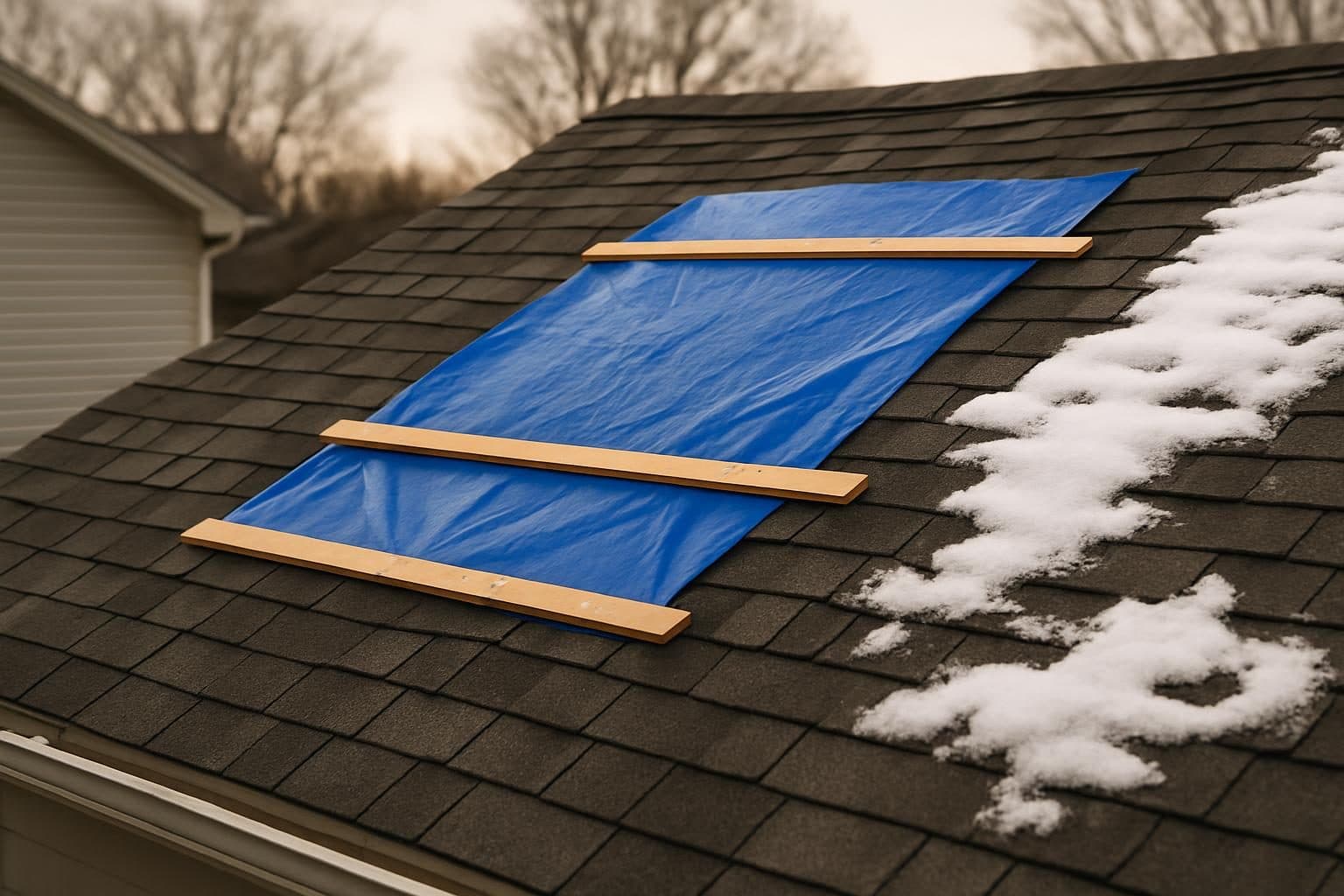
Temporary repairs vs waiting it out
Report active water entry promptly and keep people away from wet electrical fittings, sagging ceilings and unstable areas. Get appropriate emergency help where there is immediate danger. Even a small stain needs assessment; its size alone cannot show how much water is entering or whether it is safe to wait.
Emergency tarping, how it works
Emergency tarping is exactly what it sounds like. We put a heavy-duty tarp over the damaged area and secure it so it stays in place through wind, snow, and ice. A properly installed tarp can protect your home for weeks or even months while we wait for a window of warmer weather to do the permanent fix. We don't just throw a blue tarp up there and weigh it down with bricks. We use industrial tarps secured with lumber and fasteners so it holds up to Kansas wind.
Call (913) 361-5443 to discuss current availability. Roof access and temporary protection depend on weather, location, safe working conditions and crew demand. Confirm the response plan directly.
Want a straight answer about your own roof?
Free inspection, written report, no sales pitch. We cover Johnson, Douglas, Wyandotte and Leavenworth counties.