Roof Snow Removal: Safe Practices for Kansas Homeowners
Want a straight answer about your own roof?
Free inspection, written report, no sales pitch. We cover Johnson, Douglas, Wyandotte and Leavenworth counties.
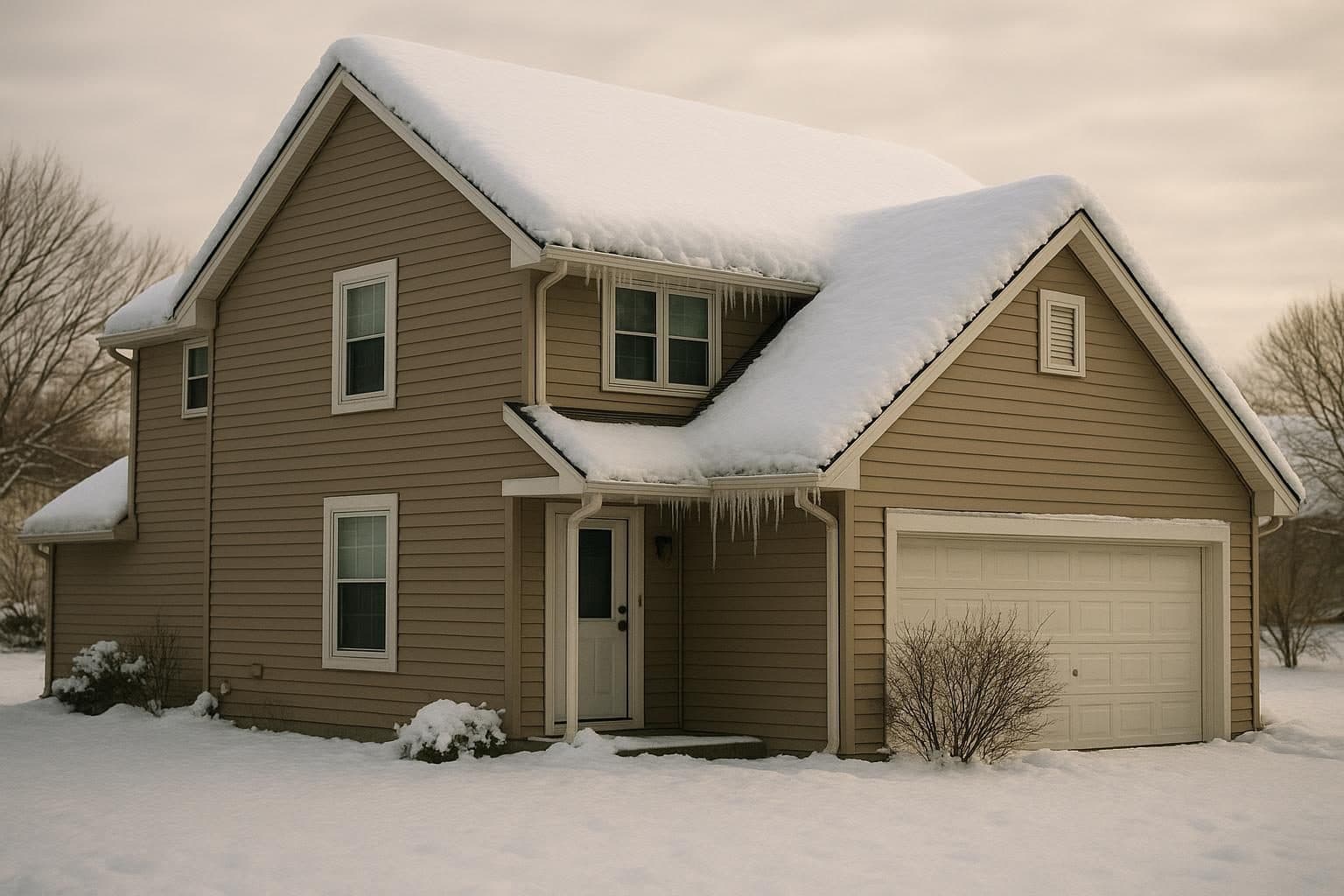
Let's start with the good news. Most Kansas homeowners will never need to remove snow from their roofs. Our typical snowfalls are light enough and melt fast enough that the load is never an issue for a properly built roof. A standard residential roof structure can handle about 20 pounds per square foot, and it takes roughly 12 inches of typical dry snow or 4-5 inches of heavy wet snow to hit that number. Most Kansas storms don't come close.
When snow load actually becomes a concern
The scenario that gets dangerous in Kansas is when we get a heavy wet snow, the kind that packs into a dense, slushy mess, followed by sustained cold that keeps it from melting for a week or more. Then another storm drops more on top. That layered, compressed snow can get heavy fast. Flat roofs and low-pitch roofs are the most vulnerable because snow doesn't shed off on its own. If you've got a flat-roofed addition, a covered porch with a low pitch, or a commercial building with a flat roof, those are the spots to watch.
Warning signs your roof is stressed
- Doors and windows on the top floor suddenly sticking or hard to open. The frame is flexing
- New cracks in interior walls or ceiling, especially near the center of the span
- Creaking, popping, or groaning sounds from the roof or attic
- Visible sagging of the roofline when viewed from outside
- Water stains appearing on the ceiling without obvious rain, could be condensation from snow load pressing on the structure
If you're seeing any of those signs, get out of the room below the affected area and call someone. That's not a DIY situation.
Safe removal with a roof rake
If you decide the snow needs to come off, a roof rake is the only tool you should be using. It's a wide aluminum or plastic blade on a long telescoping handle. You stand on the ground and pull snow off the lower edges of the roof. You don't need to clear the entire roof. Getting the first three to four feet from the eaves is usually enough to relieve the worst of the load and prevent ice dams. Don't try to scrape the roof clean. You'll damage shingles. Leave an inch or two of snow on the surface.
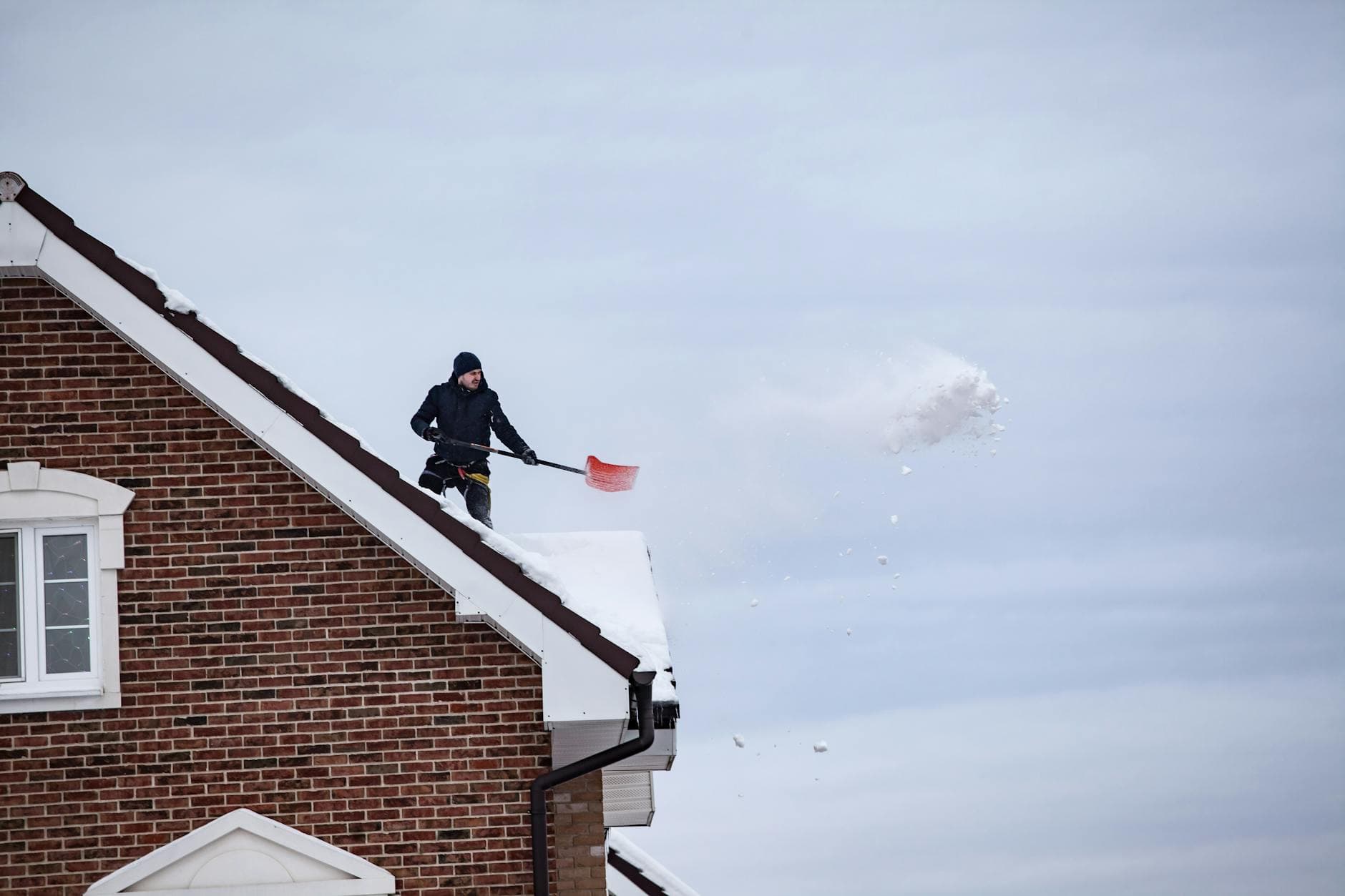
Never go on an icy roof
This is the big one. Do not climb onto a snow-covered or icy roof. It doesn't matter how careful you are, how good your boots are, or how low the pitch is. Roofing professionals with harnesses and safety equipment slip on icy roofs, a homeowner in sneakers has no chance. Falls from residential roofs are one of the most common causes of serious injury around the home, and winter makes every surface up there unpredictable. If the snow load is severe enough that a roof rake from the ground won't solve the problem, that's a professional job.
If you're worried about snow load or you're seeing warning signs, give us a call at (913) 954-4501. We've got the equipment and the experience to handle it safely.
Want a straight answer about your own roof?
Free inspection, written report, no sales pitch. We cover Johnson, Douglas, Wyandotte and Leavenworth counties.