How a New Roof Can Cut Your Summer Energy Bills
Your roof does more than keep water out. The right setup can knock 10-15% off your cooling costs in a Kansas summer.
Want a straight answer about your own roof?
Free inspection, written report, no sales pitch. We cover Johnson, Douglas, Wyandotte and Leavenworth counties.
Kansas summers are brutal on your energy bill. When it's 100 degrees outside and the sun has been beating on your roof for 12 hours, your AC is running nonstop just trying to keep up. But here's something a lot of homeowners don't think about: your roof is either helping or hurting that situation, depending on what's up there and how it's vented.
Reflective shingles are the real deal
Standard dark-colored shingles can reach surface temperatures of 150 to 170 degrees on a hot summer day. That heat radiates down into your attic and makes your AC work overtime. Reflective shingles, sometimes called "cool roof" shingles, are designed with special granules that bounce more of that solar energy back instead of absorbing it. The surface temp on a reflective shingle can be 20 to 30 degrees cooler than a standard one.
Does it make a difference you can feel? Depends on your attic setup. But studies consistently show that reflective roofing materials reduce cooling costs by around 7-15% in hot climates. In a Kansas summer where you're running the AC from May to September, that adds up.
Demand for roofing crews across the year
Ventilation is half the equation
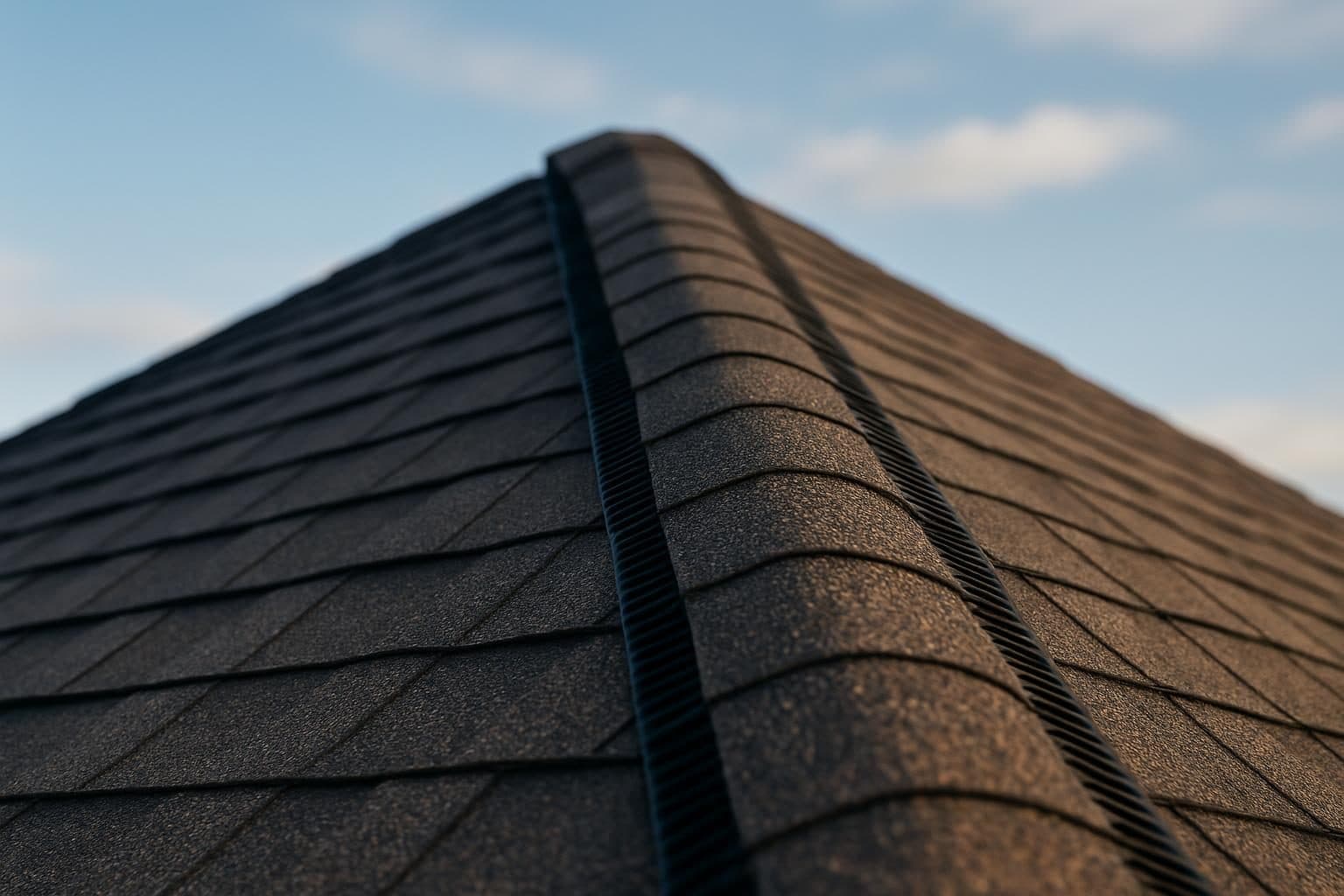
A roof without proper ventilation is like a car sitting in the sun with the windows up. Heat gets trapped in the attic and just sits there. A well-ventilated attic uses ridge vents at the top and soffit vents at the bottom to create airflow that pushes hot air out and pulls cooler air in. We've measured attic temperatures of 140+ degrees in homes with poor ventilation. After adding proper ridge and soffit vents, those same attics drop to around 100-110 degrees. That's a massive difference for your AC system.
Insulation and radiant barriers
While we're up on the roof, it's worth talking about what's underneath it. Attic insulation is the barrier between your living space and all that heat overhead. If your insulation is old, compressed, or thin, heat is pouring through. During a re-roof is actually the perfect time to evaluate your insulation situation. We can see it clearly from above once the decking is exposed. Radiant barriers are another option. They're reflective sheets that go on the underside of the roof decking and reflect heat back up instead of letting it pass through. They work well in Kansas but they're not cheap, so they make the most sense if you're already doing a full replacement.
The bottom line
A new roof by itself won't halve your electric bill. But the combination of reflective shingles, proper ventilation, and good insulation can realistically cut your cooling costs by 10-15% over a summer. On a $300/month electric bill from June through August, that's real money. And it adds up year after year. When we quote a roof replacement, we always talk through these options so you can decide what makes sense for your budget. Call us at (913) 954-4501.
Want a straight answer about your own roof?
Free inspection, written report, no sales pitch. We cover Johnson, Douglas, Wyandotte and Leavenworth counties.