Wind Damage vs. Hail Damage: How to Tell the Difference
Want a straight answer about your own roof?
Free inspection, written report, no sales pitch. We cover Johnson, Douglas, Wyandotte and Leavenworth counties.
After a big Kansas storm, your roof might have wind damage, hail damage or a combination of the two. The visible patterns and repair scope can differ. Insurance treatment is policy-specific, and your insurer determines whether the reported damage is covered.
What hail damage looks like
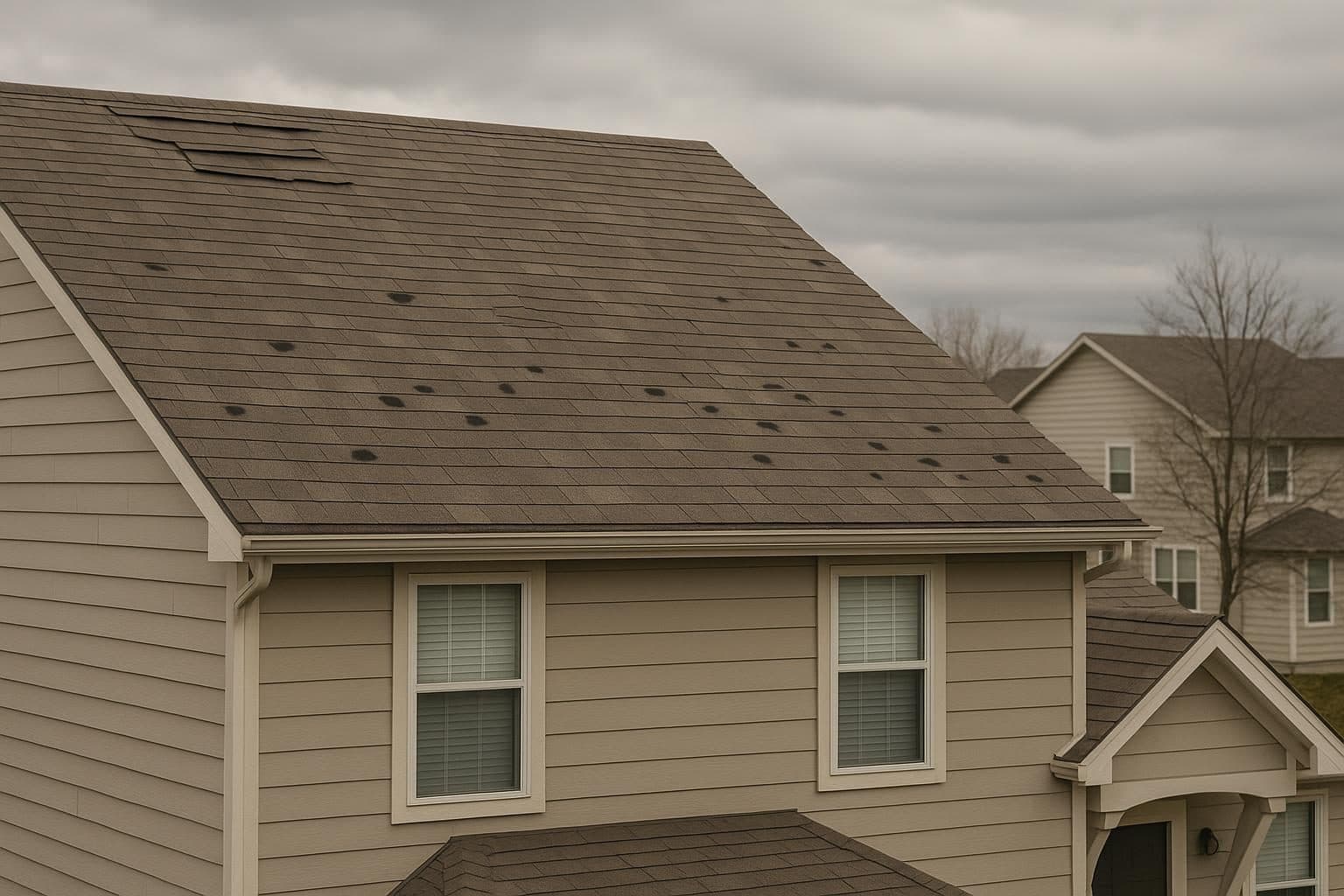
Hail damage follows a random pattern. The impacts hit wherever the stones fell, so you'll see damage scattered across the whole roof without any particular logic to it. On asphalt shingles, hail knocks off the protective granules and leaves dark, circular marks. Sometimes the shingle is dented or cracked. If the hail was big enough, you might see it puncture through the shingle entirely.
The giveaway for hail is consistency: the damage shows up across the entire roof face that was exposed to the storm, and it shows up on other surfaces too. Check your gutters for dents, your AC unit, any metal vents on the roof. If everything that faces the sky got hit, that's hail.
Visible roof patterns after a storm
Possible impact pattern
- Scattered marks
- Localized granule loss
- Soft spots or bruising
- Exposed mat at some marks
Possible age-related pattern
- Broad changes across a slope
- Gradual granule thinning
- Firm surface between marks
- Blisters or raised areas
What wind damage looks like
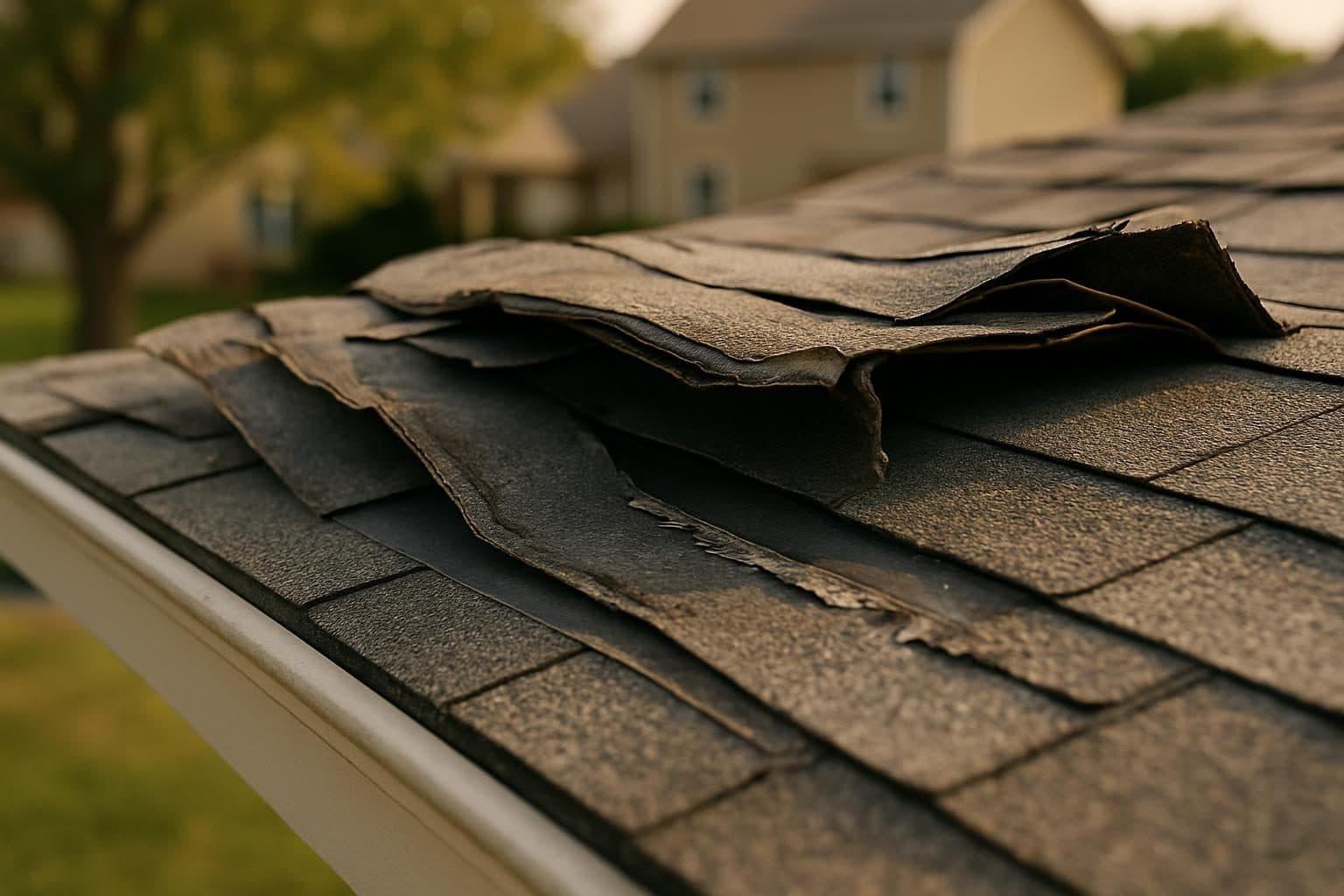
Wind damage has a pattern to it, and it's almost always concentrated along edges and ridges. That's because wind creates lift, it catches the underside of shingles and peels them back. You'll see shingles folded over, torn off, or creased along a line. The damage usually follows the prevailing wind direction, hitting one side of the roof harder than the other.
Ridgeline shingles are especially vulnerable because wind hits the peak of the roof and rolls over the top, creating suction. We see blown-off ridge caps after almost every windstorm, even moderate ones. The edges of the roof, along the rakes and eaves, are the other hot spots.
Why it matters for insurance
Some policies apply different deductibles or terms to wind and hail. Review the declarations and roof-coverage sections, then ask your insurer to explain how the policy applies to the reported event. Do not estimate the homeowner's cost from a contractor inspection alone.
When both patterns appear, a roofing contractor can photograph the visible conditions and separate proposed wind-related and hail-related work in its estimate. The insurer evaluates the cause, applies the policy and determines coverage and settlement.
Get it documented properly
Report visible damage to your insurer promptly according to your policy. MCO can inspect accessible roof areas, document visible wind and hail patterns, provide a written estimate and answer roof-scope questions. The contractor report does not control the insurer's assessment or claim decision. Call (913) 954-4501 to schedule an inspection.
Sources
Primary references used for the specific claims identified in this guide.
- Filing a Home Insurance Claim
Kansas Department of Insurance
Explains prompt loss reporting, damage photographs, temporary protection, policy review and the separate roles of the insurer and a contractor's estimate.
Want a straight answer about your own roof?
Free inspection, written report, no sales pitch. We cover Johnson, Douglas, Wyandotte and Leavenworth counties.